Categories
How I Applied the Tao of Cooking to Market Research
Want to do more efficient research? Want better research reports from your team? Take a few lessons from a skilled cook’s philosophy.
Want to do more efficient research? Want better research reports from your team? Take a few lessons from a skilled cook’s philosophy.
Two of my passions include cooking and market research. I learned both skills from one person – my grandma – the best chef I know. With every cooking tip and trick she gave, she kept inspiring me to think about the Tao of cooking, a philosophy which I was surprised to find applicable to both of my passions.
Whether you are a market research analyst seeking advice to research more efficiently, or you are a leader who makes data-driven decisions and you want more accurate and reliable reports from your team, consider these three lessons.
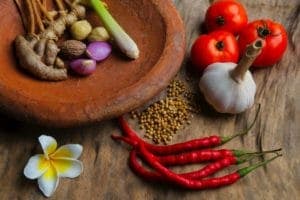
Photo by Baehaki Hariri on Unsplash
Planning is Essential
The importance of food can never be overemphasized in a Chinese family: My grandma usually spends a whole day in the kitchen to prepare for a big dinner during the holidays. However, recipe planning and food preparation is actually done days before, sometimes even weeks before. Planning is essential, as my grandma tells me all the time. The more thorough planning you have, the more efficient you will be during the cooking.
And so does market research. No matter what market research methods are chosen, it has to go through certain steps before a full report is ready: Define the problem, specify samples, design the research, collect data, analyze results, and present findings. A typical market research project takes about 6 – 7 weeks on average, which also varies from research complexity.
As market researchers, during the planning stage, we need to leave enough time for data gathering. Though research shows that response rates actually increased during the time of the pandemic, we still want to take as many possible delays into consideration: holiday season, survey fatigue, sending to the wrong recipients, for example. Proper planning and correct time estimation set out efficient market research.

Photo by nrd on Unsplash
Find High-Quality Ingredients
My grandma goes to the grocery market every morning to pick the freshest ingredients for the day. One of her favorite things after shopping is to show off what high-quality ingredients she found: Sometimes the sellers save the best vegetables for her as they all know how picky my grandma is (in a good way for sure.)
Ingredients in cooking are just like respondents in market research. I learned to set a high standard from my grandma: The more representative sampling of respondents you set, the more powerful insights and accurate predictions you derive.
One technique I found useful is to set necessary and sufficient filters for stratified random sampling (random sampling with qualified respondents). This can not only help reach the target audience but also improve the data quality overall. Thanks to the increased tracking ability of survey tools, we become more capable of filtering unqualified responses out, tracking survey completion speed and open text answer quality, and using bot detection techniques.
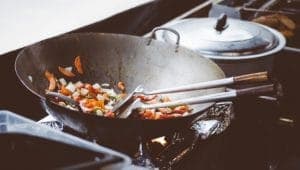
Photo by Clem Onojeghuo on Unsplash
Pick the Right Tool
My grandma has an incredibly full collection of kitchen tools, and has some specific requirements for certain dishes: Fish has to be cooked in an iron wok, cabbage needs to be stirred fry with fire, etc. Due to the limited storage capacity in my 100-square-foot kitchen, I couldn’t get all the tools but tried my best to get all the necessary ones, as I believe in the importance of the right tools in cooking.
I hold the same belief in market research methodologies. The concept can be divided into two broad groups: primary and secondary data. Each can be further subdivided by different methods and sources.
A decision all market researchers need to make is which tool to use. Obtaining the most accurate market understanding is one goal, but we also need to be mindful of the cost, both price-wise and time-wise. I always make myself answer these three questions before conducting any research:
- Why? (Is existing data enough to test our hypothesis and serve business needs?)
- When? (When do we need the data? Are there any deadlines we need to meet?)
- How? (What’s the business needs for this research and in what methods do we want to get that data?)
Looking back at the definition of “Tao,” it is the natural order of the universe and is known through actual living experience. My experience of applying cooking Tao to market research feels perfectly aligned with it. I can’t wait to share this with my grandma in exchange for more cooking tricks and tips from her – because she just sparked my imagination to apply more Tao of gourmet cooking to my research work.
Photo by Caroline Attwood on Unsplash
Comments
Comments are moderated to ensure respect towards the author and to prevent spam or self-promotion. Your comment may be edited, rejected, or approved based on these criteria. By commenting, you accept these terms and take responsibility for your contributions.
Disclaimer
The views, opinions, data, and methodologies expressed above are those of the contributor(s) and do not necessarily reflect or represent the official policies, positions, or beliefs of Greenbook.
ARTICLES
Not All Fraud Is Created Equal
Why understanding the people behind survey fraud is the first step toward improving data quality.
Mary Draper
VP, Strategic Accounts & Quality at EMI Research Solutions
Why Online Surveys Need Smarter Quality Assurance Now
6 min read
Survey fraud is evolving fast. Discover how AI-based coherence checks and behavioral tracking are key to protecting data quality in modern research.
Sebastian Berger
Head of Science ReDem at Rep Data
Truth To Be Told: Five Realities About Online Sample That Compromise Data Quality
6 min read
Explore five key truths about sampling, uncovering fraud, low-quality respondents, and transparency issues that have eroded data quality over two deca...
Karine Pepin
Co-Founder at The Research Heads
Rethinking Data Quality: Addressing the Industry’s Trust Deficit
4 min read
Market research faces a trust gap due to data quality issues. A clearinghouse model and better participant experience can restore trust and elevate in...
Bob Fawson
CEO and Founder at Data Quality Co-op

Sign Up for
Updates
Get content that matters, written by top insights industry experts, delivered right to your inbox.


