Categories
When Its Time to Change: Transitioning Your Data Collection Platform
There are a multitude of options for data collection platforms. When is it time to change, and how do you transition successfully?
Much like the rest of today’s ever-evolving technological world, the market research landscape continues to advance, especially as tech companies make large investments in new data collection tools. Businesses can now choose from various data collections tools, unlike the old framework, which only involved a handful of big name solutions dominating the marketplace.
From cloud-based offerings to low-cost DIY solutions to open source tools or even high maintenance multiserver inhouse installations, businesses have a multitude of options when it comes to selecting a platform that best fits their data collection needs.
If your organization is looking to adopt a new solution or even transition your existing platform to a totally new one, there are several key elements to consider. Read on to ensure you are setting your team up for success when it comes to data collection.
The question
The first question is often a simple, “why should I change?”
Let’s answer this question with an example from our day-to-day lives. Several years ago we were content hanging on to the same mobile phone for three or four years. Now, with constant upgrades, and new features and platforms, it’s become common to change phones more regularly. The world is moving fast, and to stay up to speed, we do need to embrace change.
The same concept applies to your business. The rise of the digital customer has forced businesses to act fast. Market research and consulting firms helping businesses make valuable insights now have to deliver speed. The challenge is the demand for research has increased, but the budget remains the same. So to stay in business and grow, one can’t shy away from a periodic review of technology and should remain open to change.
A platform transition is, of course, not a simple endeavor. Scrapping old technology calls for significant investment of time & money, training investments, integration & implementation efforts. So an organization should make sure they have a plan.
The framework
Once your business is ready to change, you can ensure a smooth progression by following a simple framework:
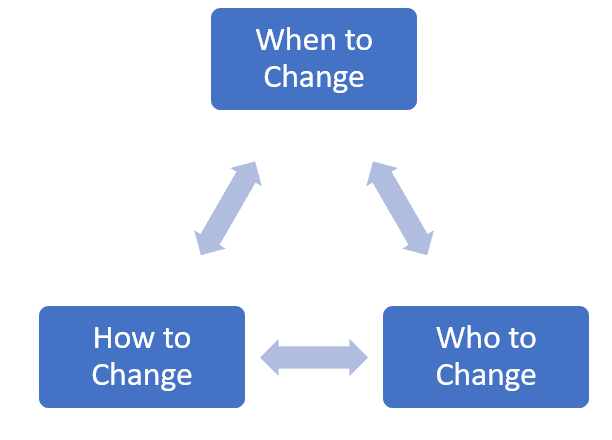
When to change
An organization should have some sort of mechanism for reviewing current and future customer and industry needs, the competitive landscape and the existing technology road map. Doing these on a periodoic basis allows the business to make an informed decision about the need for change.
Who to change
It is important to keep your eyes and ears on what’s happening in the industry and compare it to your existing technology platform. Questions to ask: Which technology will help innovate, improve speed, efficiency, lower cost of operation and be easy to integrate with your existing ecosystem? Another important set of questions; is the new technology popular enough to find people with skillsets to use it, as well as a supplier market that can support it. Unless all aspects of the change are thought all the way through, one may end up married to an unsustainable technology platform for several years and/or scrapping the solutions in a few years, losing significant time and money in the process.
How to change
At this point, you have already invested in the licenses of the new technology and everyone is eager to see the benefits. You should make sure expectations at all levels are set, and then deploy a seed transition team dedicated to the initiative. The team should follow a transition road map with specific milestones and establish a process for using the new technology. Other critical steps are to make a list of necessary integrations with other systems, baking in a parallel run plan before movement of any live projects, thorough testing of all connections, building reusable assets which complement the capability of the new technology, and a governance model around the transition plan.
A platform transition is a costly and demanding initiative for any organization, but it’s also imperative to stay up-to-date with current data gathering tools. By investing up front in the above framework, organization can do it correctly and reap the benefits.
Comments
Comments are moderated to ensure respect towards the author and to prevent spam or self-promotion. Your comment may be edited, rejected, or approved based on these criteria. By commenting, you accept these terms and take responsibility for your contributions.
Disclaimer
The views, opinions, data, and methodologies expressed above are those of the contributor(s) and do not necessarily reflect or represent the official policies, positions, or beliefs of Greenbook.
More from Jitesh Marlecha
How Autodesk Drew Up a Better Data Architecture
3 min read
Autodesk consolidated numerous customer feedback sources onto one platform, yielding stronger customer relations
The 6-Step Process to Consolidating Research Technologies
3 min read
A guide to evaluating & implementing survey data tools system consolidation.
Market Research Firms Fight to Survive: Top 5 Ways MR Firms are Overcoming Challenges
4 min read
Learn the five ways MR firms are overcoming challenges from industry change.
ARTICLES
Navigating the ‘Build vs Buy’ Decision in ResTech
6 min read
As AI simplifies product-building, MR teams must weigh build vs. buy carefully, balancing governance, reliability, and research expertise.
Jiten Madia
Founder & CEO at flowres.io
Right-Size Your Restech
5 min read
Restech can save time and money, but underuse leads to wasted value. Learn simple steps to maximize your tech investment and boost renewal success.
Z Johnson
Consultant at MRXplorer
Capitalize on Market Research's Tech-Forward Future
5 min read
Discover the latest innovations and technologies in the restech space amidst industry-wide slowdowns with our market research website.
John Bird
Executive Vice President at Infotools
The Evolution of B2C Consumer Segmentation in the Digital Age
6 min read
Consumer segmentation has evolved from traditional demographic methods to more advanced techniques in the digital age, driven by vast data availabilit...

Sign Up for
Updates
Get content that matters, written by top insights industry experts, delivered right to your inbox.


