Categories
Super Bowl 2017 Ad Effectiveness
While Super Bowl ads do well on “likeability” and generating “buzz”, they didn’t fare as well on critical measures like “purchase intent”.

By Michael Wolfe
According to Advertising Age, a 30-second Super Bowl ad in 2017 cost about $5 million. That puts total Super Bowl 51 ad spend near $385 million. It seems like many Super Bowl ads focus on gaining viewers likability and it often appears to be a popularity contest. The key question, however, is how well do these ads drive customers to spend money or do some kind of proactive and positive behavior towards the advertised brand. That is the issue we wish to explore here.
Using Advertising Benchmark’s ABX copy test scores, the overall results for 2017 Super Bowl commercials were nothing to brag about. In fact, using standard ad effectiveness criteria, 2017 ads were a disappointment, at best. Overall scores of the last 5 Super Bowls also generally fall short of ad norms.
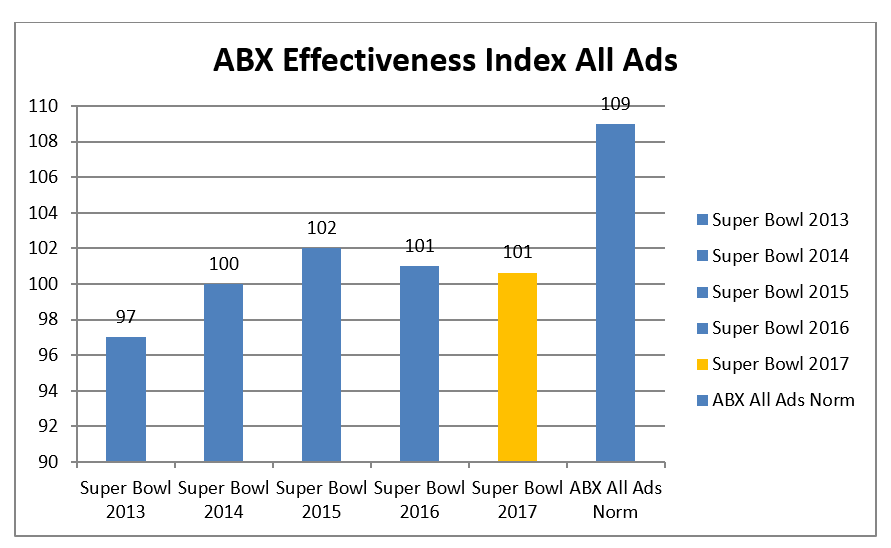
The chart below summarizes ABX ad effectiveness scores for 65 ads. Overall, 58% of these ads scored at or above normative levels. As shown, unfortunately, there were some very low scoring ads. Ads with a political message, such as the 84 Lumber ad, did not fare that well.
The ABX ad testing system is based on a survey of a nationally representative panel. The major components making up the ABX index are:
- Awareness/brand linkage. Was the brand advertised correctly recalled?
- Message clarity. Was the primary commercial message understood?
- Brand reputation shift. Did viewing the ad change brand reputation perceptions?
- Message relevance. Was the ad message deemed relevant to the customer?
- Call to action. Did the ad elicit any positive actions or intentions, including purchase intent?
- Although not part of the ABX score algorithm, was the ad liked or disliked?

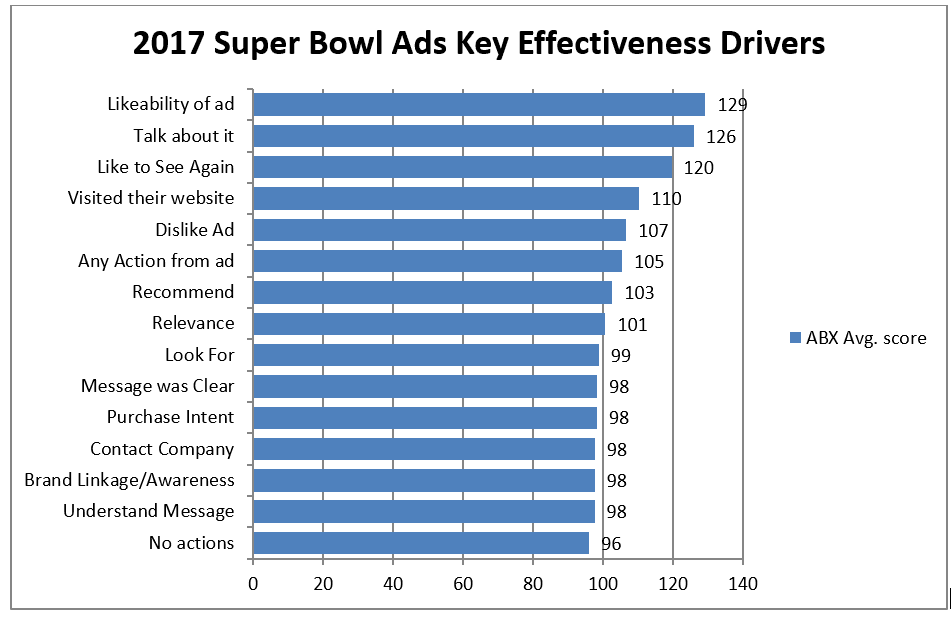
If we look at the key criteria or drivers of ad effectiveness, below shows that, while Super Bowl ads do very well on “likeability” and generating “buzz”, these didn’t fare so well on key action points and particularly on such critical measures as “purchase intent”
In sum, the key insight here is that popularity and likeability do not always translate to effective actions from the customer. Clearly, funny, cool and emotional ads can be good ads, but focusing on winning a popularity contest does not always translate into effective marketing, which stimulate customers to do some positive action towards a brand.
Comments
Comments are moderated to ensure respect towards the author and to prevent spam or self-promotion. Your comment may be edited, rejected, or approved based on these criteria. By commenting, you accept these terms and take responsibility for your contributions.
Disclaimer
The views, opinions, data, and methodologies expressed above are those of the contributor(s) and do not necessarily reflect or represent the official policies, positions, or beliefs of Greenbook.
More from Michael Wolfe
Super Bowl 2019 Advertising Effectiveness
7 min read
Super Bowl Ads more effective than ever.
Artificial Intelligence and the Future of Marketing Analytics
6 min read
New software can potentially facilitate campaign analytics and driver analysis of panel data, cutting time and effort dramatically.
The Myth of Millennial Ad Responsiveness
3 min read
Are Millennials as unresponsive to advertising as commonly believed? Michael Wolfe challenges this assumption.

What Makes a Great Super Bowl Ad?
6 min read
Some hard facts about what makes Super Bowls ads different from other TV ads and how to make yours generate buzz that builds your brand.
ARTICLES
Top in Research Methodologies
How to Write a Great Case Study in the Insights and Analytics Industry
3 min read
Discover how impactful case studies connect data to decisions. Learn to craft compelling narratives that showcase research's vital role in driving bus...
Karen Lynch
Editor-in-Chief at Greenbook
Partner Content
The Lines around User and Market Research Are Blurring, so What Happens Next?
How are research roles changing? Explore how AI, rising demand, and earlier involvement are reshaping market and user research.
Louise Jones
Senior Brand Manager at Maze
When Bad Online Sample Looks Good Enough
How can survey fraud survive quality checks? Learn what research buyers should ask to evaluate respondent quality and data integrity.
Chandra Limiarja
Data Analyst at Independent
Are We Cleaning Too Much? The Missing Signals in Post-Survey Review
How can AI improve survey data cleaning? Learn how richer fieldwork signals can reduce false positives and increase confidence.
Karine Pepin
Co-Founder at The Research Heads

Sign Up for
Updates
Get content that matters, written by top insights industry experts, delivered right to your inbox.


