Categories
Cartograms: A Visualization Technique for Researchers
As market researchers seek out better visualization techniques, it is worth investigating the cartogram.
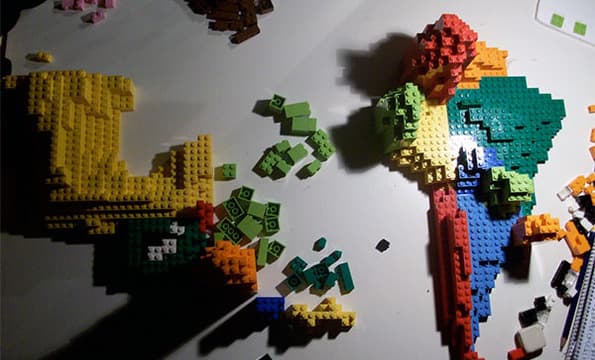
Courtesy of http://www.thecreatorsproject.com/blog/blocking-your-view-data-visualization-with-legos
By Jeffrey Henning
As market researchers seek out better visualization techniques, it is worth investigating the cartogram. A cartogram is a map in which geographic entities (counties, states or countries) are resized according to any dimension of interest: population, sales, or – given that we are in election season – electoral votes.
When studying maps and charts, we recognize large areas as being more important. Which makes it confusing to see something like the 2008 U.S. electoral map below:
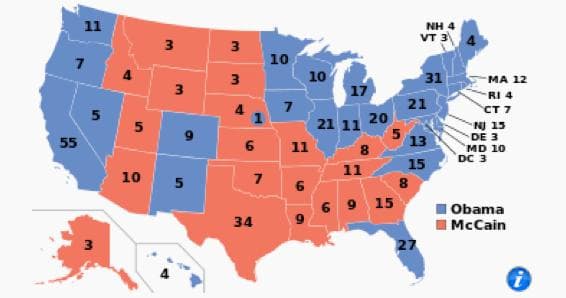
Source: Wikipedia, http://en.wikipedia.org/wiki/United_States_presidential_election,_2008
Visually it looks like John McCain (represented by the red states) won the presidential election. But while the red areas are visually larger, the blue states represent 68% of the votes in the Electoral College (365 votes) to the red state’s 32% (173 votes). That’s because the red states are more sparsely populated and electoral votes correlate to population (every state gets a minimum of 3 votes: 2 for its senators and then 1 for each representative, allocated by population).
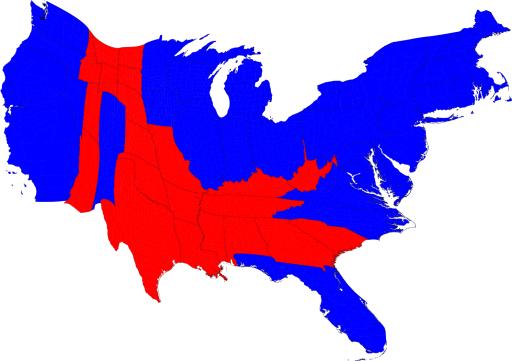
Now contrast the above map to a cartogram, where the states have been resized to visually convey how many electoral votes they have:
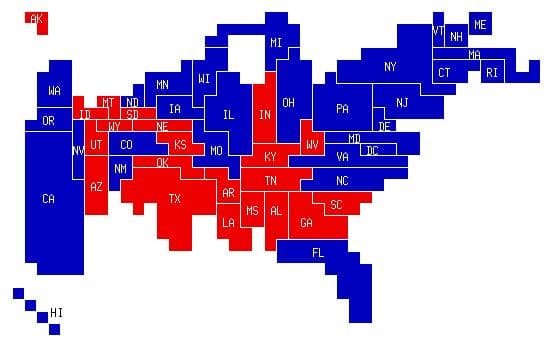
Source: Colley Rankings, http://colleyrankings.com/election2008/
Here the greater electoral value of the 2008 blue states is discernible at a glance.
J. Richard Gott created this chart simply by drawing each state on graph paper with one square per electoral vote. In addition, he made sure that “all states which touch in reality touch on the map”. You can create cartograms as simply as that.
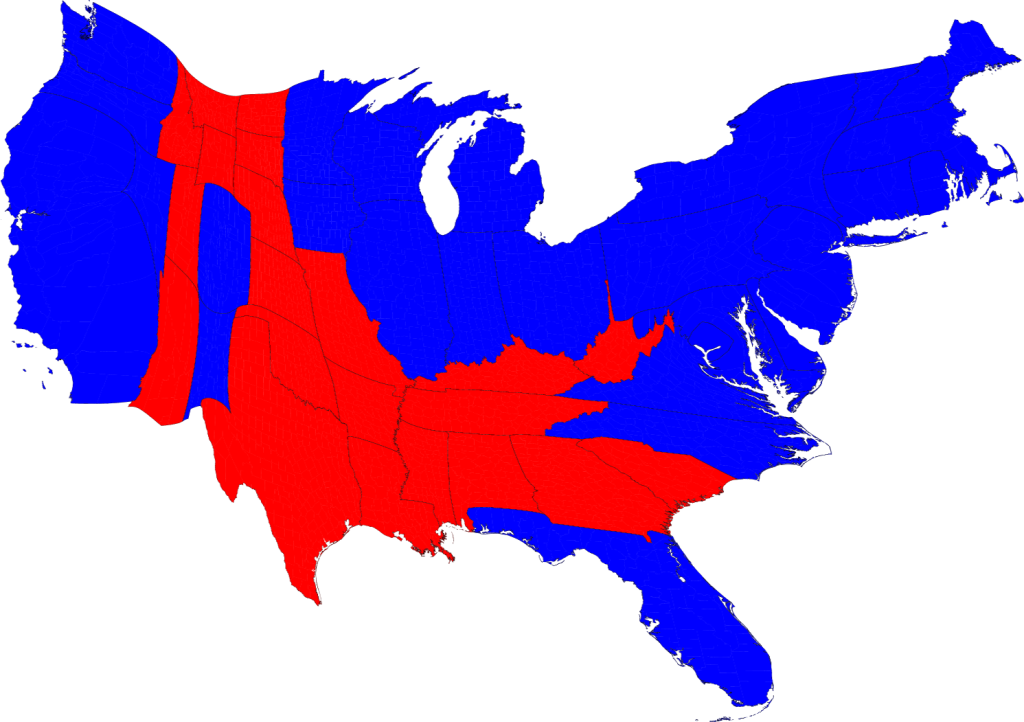
Alternatively, you can use specialty software to produce results that preserve more of the geographic features of individual states. Take this example:
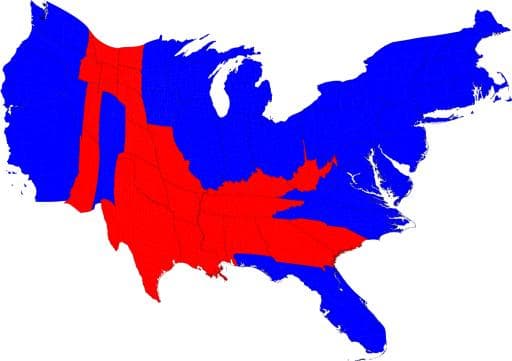
Source: M. E. J. Newman, http://www-personal.umich.edu/~mejn/election/2008/stateelecredblue1024.png
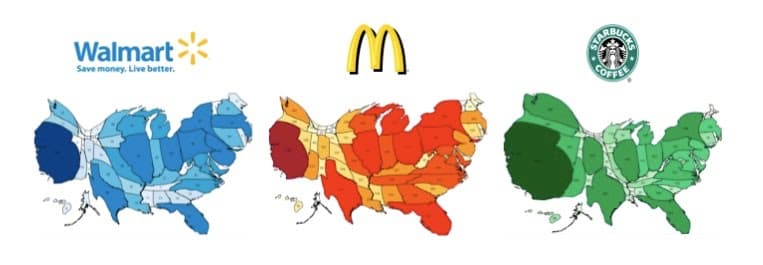
How can you use cartograms in your work? To show locations, sales, market share or other attributes by state or country. For instance, here’s the number of locations by state for three major brands:
Source: Steph Abegg, http://www.stephabegg.com/home/projects/cartograms
To learn more about cartograms, check out:
Comments
Comments are moderated to ensure respect towards the author and to prevent spam or self-promotion. Your comment may be edited, rejected, or approved based on these criteria. By commenting, you accept these terms and take responsibility for your contributions.
Disclaimer
The views, opinions, data, and methodologies expressed above are those of the contributor(s) and do not necessarily reflect or represent the official policies, positions, or beliefs of Greenbook.
More from Jeffrey Henning
How to Write Like an AI
2 min read
Some “tips” so that you can continue to enjoy writing, while pretending to simply be an editor of AI-generated content.
A Festivus for the Rest of Us Respondents
5 min read
Reflecting on how we can improve survey design for respondents.
Aliens vs. Dinosaurs
3 min read
Given the diverse backgrounds of market researchers, there is a real need to continuously train.
Researchers and the Love of Learning
6 min read
MRII’s survey on how the market research industry is doing in career satisfaction, growth opportunities, and learning preferences.
ARTICLES
Top in Research Methodologies
How to Write a Great Case Study in the Insights and Analytics Industry
3 min read
Discover how impactful case studies connect data to decisions. Learn to craft compelling narratives that showcase research's vital role in driving bus...
Karen Lynch
Editor-in-Chief at Greenbook
Partner Content
The Lines around User and Market Research Are Blurring, so What Happens Next?
How are research roles changing? Explore how AI, rising demand, and earlier involvement are reshaping market and user research.
Louise Jones
Senior Brand Manager at Maze
When Bad Online Sample Looks Good Enough
How can survey fraud survive quality checks? Learn what research buyers should ask to evaluate respondent quality and data integrity.
Chandra Limiarja
Data Analyst at Independent
Are We Cleaning Too Much? The Missing Signals in Post-Survey Review
How can AI improve survey data cleaning? Learn how richer fieldwork signals can reduce false positives and increase confidence.
Karine Pepin
Co-Founder at The Research Heads



Sign Up for
Updates
Get content that matters, written by top insights industry experts, delivered right to your inbox.


