Categories
Two Key Challenges To Measuring The ROI Of Social
The measurement of a social campaign needs to be in the context of the objectives, and those objectives need to link to things like sales.

By Ray Poynter

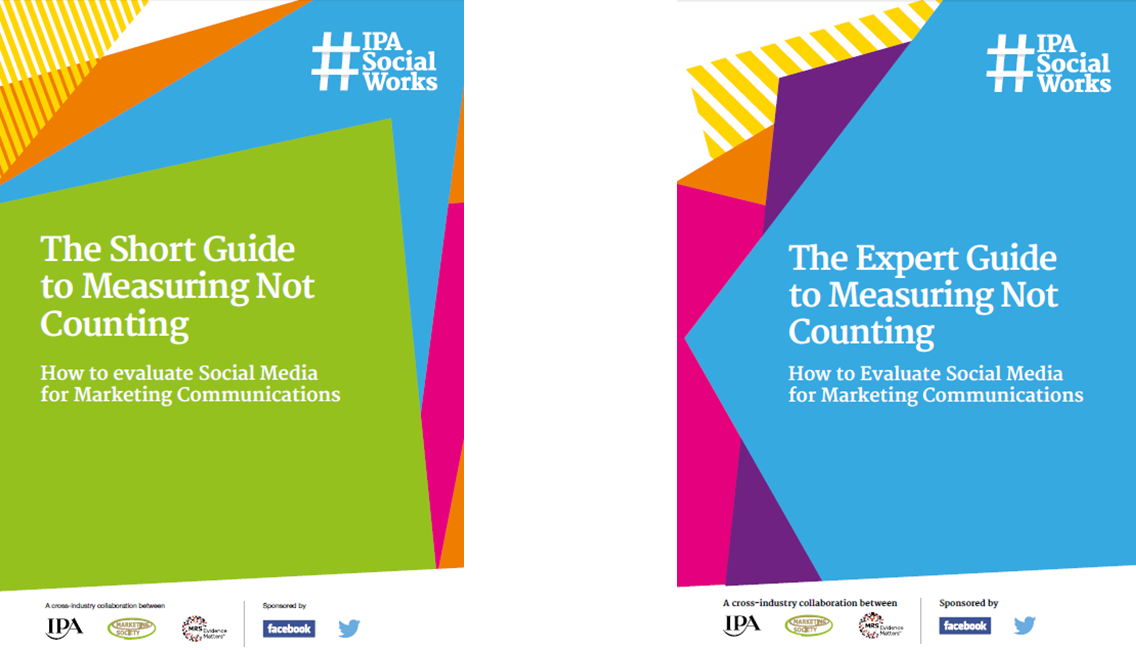
Want to know how you should be evaluating social media campaigns? Do you want to know how to balance short-term activation events with long-term effects? The answers are in the recently launched #IPASOCIALWORKS Guide to Measuring Not Counting.
As one of the authors of the Guide I have been involved in several events, including the launch at the IPA, workshops, and conference sessions. Whilst these events have been generally positive, two major challenges have been exposed by our interactions with attendees and people working inside advertisers and agencies.
These two challenges do not include the complexity of econometric modelling and experimental design. Although those topics are complex, there are people who can help. No, the two problems are:
- Being asked to measure social too late
- Not having access to sales data
Measurement needs ‘baking in’ to social
All too often the agency or social team are asked to evaluate campaigns that are about to start, or perhaps underway, and even sometimes that have finished. Occasionally this is possible, but usually it is just folly.
As the Guide points out, the measurement of a campaign is about much more than likes, shares, downloads, and plays. The measurement needs to be in the context of the objectives, and those objectives need to link to things like sales. To measure the complex interactions in social, and between social and other channels, it is necessary to create a plan for what will happen, when it will happen, and how it will be measured. For example, if a campaign is going to be assessed it is best if it does not all start at the same time, and it is best if different regions or groups are exposed to different elements of the campaign.
Asking for the evaluation too late is likely to lead to a report that talks about likes and shares, rather than sales and shifts in likelihood to recommend.
The Guide sets out a five step plan to ‘bake’ measurement into a social campaign.
- What is the campaign/activity designed to do? Defining macro objectives, like sales or likelihood to recommend, and micro objectives, such as downloads, plays, and engagement.
- Why social? What is the role of social? Including issues like whether social is being used on its own or in conjunction with other channels.
- What decisions will be made on the strengths of the evaluation? For example, are the measurements going to be used to manage the campaign in real-time?
- What are the appropriate datasets and metrics? With the objectives and uses defined we can select the right things to measure, and make sure that the campaign is deployed in a ways that facilitate measurement.
- Designing the evaluation process? The gold standard is market mix modelling, but that may not be affordable in terms of time or cost. The need for accuracy and the need to be pragmatic have to be traded off to select an appropriate design.
Many of the people we have spoken to say they only get approached at stage 4. In these cases it is essential that somebody takes ownership of 1, 2, & 3. For example that somebody lists the objective, both macro and micro, defines why social was chosen, and highlights the decisions that will be made using the measurements.
Measuring ROI and impact requires sales data
Brands guard their sales data very jealously, for fairly obvious reasons. However, without sales data it is not possible to effectively measure the ROI of most social campaigns. If sales data are not available the teams tend to fall back on measuring the available metrics, such as likes and shares, which in turn devalues the measurement of social.
To measure the impact of social typically requires granular data (e.g. weekly data), it requires data on what happened (e.g. impressions), it requires data on who was exposed to what, and it requires sales data.
If brands want to accurately evaluate social, to properly decide how much they should be spending on it, they need to make sales data available to the teams measuring the ROI – which can either be internal teams or specialist agencies.
Have you had problems accessing sales data when modelling? Do you have any tips to share on how to make the case for more data being made available?
Comments
Comments are moderated to ensure respect towards the author and to prevent spam or self-promotion. Your comment may be edited, rejected, or approved based on these criteria. By commenting, you accept these terms and take responsibility for your contributions.
Disclaimer
The views, opinions, data, and methodologies expressed above are those of the contributor(s) and do not necessarily reflect or represent the official policies, positions, or beliefs of Greenbook.
More from Ray Poynter
Quality is More than Data
5 min read
Learn why research quality depends on study design, data integration, and decision-making, not just respondent authenticity.

Word Cloud Plus Extracts Hot Buzz Topics
4 min read
The GRIT data collected toward the end of 2022 included 918 open-ended replies to the question “Related to insights, research, or analytics, which top...
Observational Data Has Problems. Are Researchers Aware of Them?
13 min read
Observational data is a tempting shortcut for insights but researchers must consider its potential shortfalls
Want it Faster, Cheaper, Better? Then You’d Better Sign Up to Prescriptive Analytics
5 min read
Using Prescriptive Analytics to navigate the data-filled world.
ARTICLES
Navigating the ‘Build vs Buy’ Decision in ResTech
6 min read
As AI simplifies product-building, MR teams must weigh build vs. buy carefully, balancing governance, reliability, and research expertise.
Jiten Madia
Founder & CEO at flowres.io
Right-Size Your Restech
5 min read
Restech can save time and money, but underuse leads to wasted value. Learn simple steps to maximize your tech investment and boost renewal success.
Z Johnson
Consultant at MRXplorer
Capitalize on Market Research's Tech-Forward Future
5 min read
Discover the latest innovations and technologies in the restech space amidst industry-wide slowdowns with our market research website.
John Bird
Executive Vice President at Infotools
The Evolution of B2C Consumer Segmentation in the Digital Age
6 min read
Consumer segmentation has evolved from traditional demographic methods to more advanced techniques in the digital age, driven by vast data availabilit...


Sign Up for
Updates
Get content that matters, written by top insights industry experts, delivered right to your inbox.


